



Bridge Loan vs. Gap Loan: What’s the Difference and Which One Do You Need?

December 5, 2025

Bridge Loan vs. Gap Loan: What’s the Difference and Which One Do You Need?

In commercial finance, the terms Bridge Loan and Gap Loan are often used interchangeably — but they are not the same. For business owners, real estate investors, or developers choosing the right structure can save time, prevent delays, and unlock capital when traditional lending slows down.

Plethora Financial Solutions specializes in fast, alternative funding. Below is a clear breakdown to help you decide which option fits your situation.

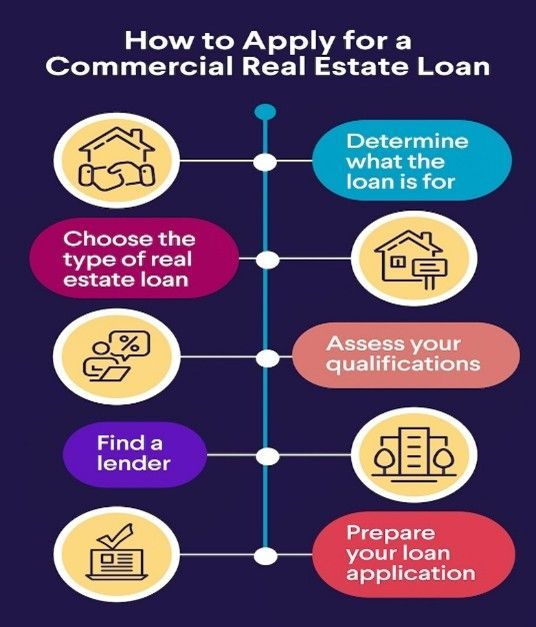
Infographic: Steps to apply for a commercial real estate loan. Includes icons and colored steps.

What Is a Bridge Loan?

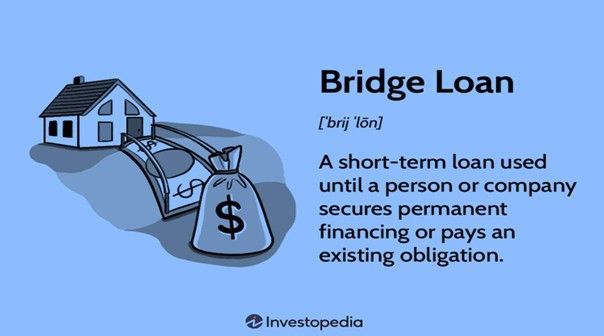
Illustration of a bridge loan concept. A house connects to a bag of money over a bridge of cash, short-term financing.

A Bridge Loan is short-term financing that covers a gap between now and a future, predictable financial event — usually the sale of a property, a refinance, or long-term loan approval.


Key Features

  • Short-term: 6–24 months
  • Collateral-backed (typically real estate)
  • Fast approvals and funding
  • Higher rates compared to bank loans — but much faster
  • Ideal when you know your exit strategy

Common Use Cases

  • Buying a new commercial property before selling an existing one
  • Quick-close real estate acquisitions
  • Repositioning or renovating property prior to refinancing
  • Taking advantage of time-sensitive investment opportunities


Who Should Use It:
Real estate investors, developers, or business owners who need speed, certainty, and temporary capital to move on an opportunity.

What Is a Gap Loan?

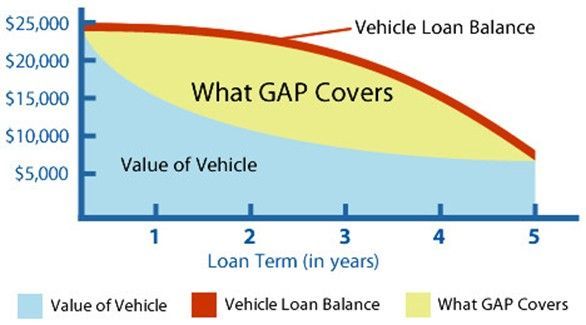
Graph showing vehicle loan balance, vehicle value, and what GAP insurance covers over a 5-year loan term.

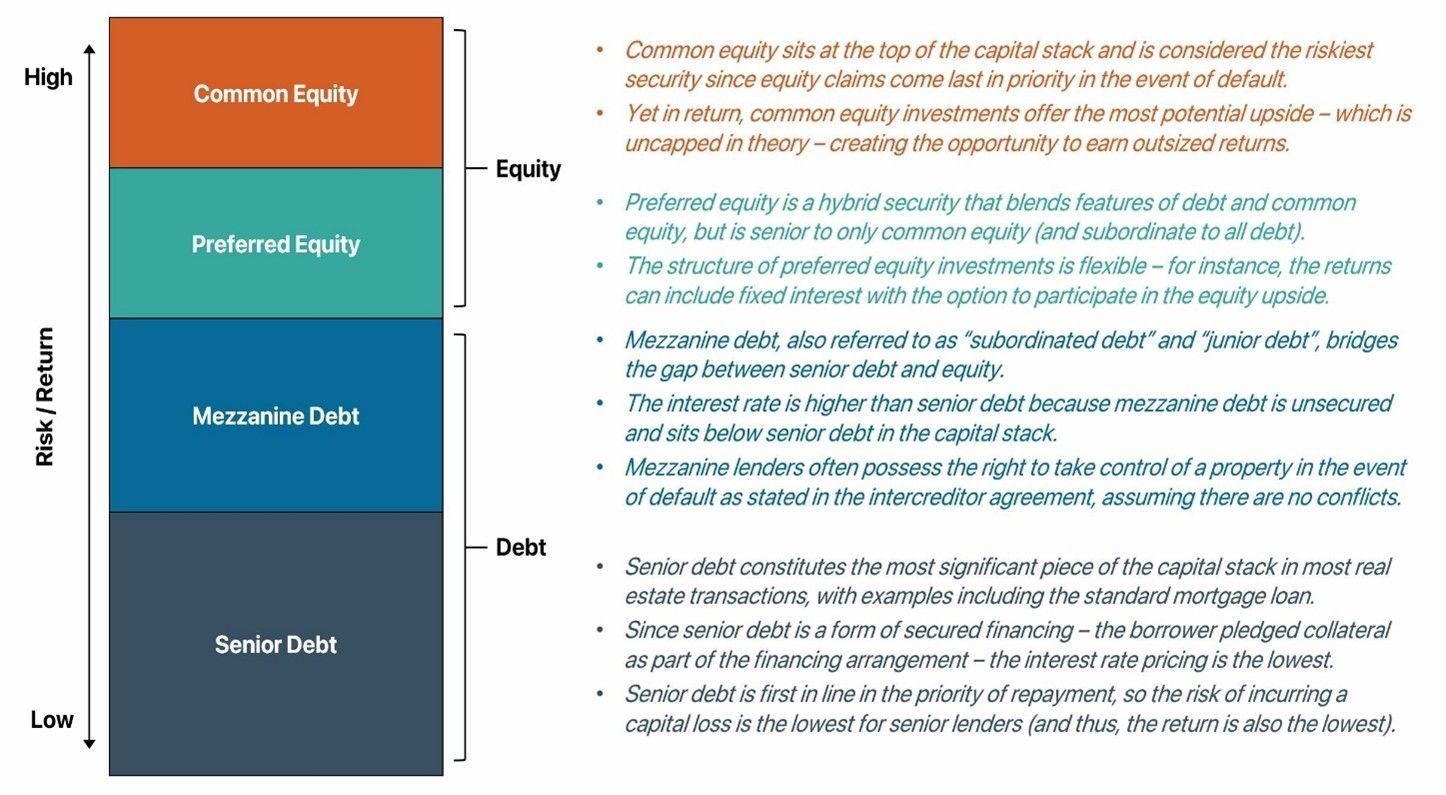
A Gap Loan (often called gap financing or mezzanine capital) is designed to fill a financial shortfall when your primary funding source doesn’t fully cover project costs.

Think of it as the “plug” in your capital stack.


Key Features

  • Used alongside another loan (SBA, construction, CRE loan, bridge loan, etc.)
  • Shorter-term than bridge loans — often 3–12 months
  • Covers the “missing amount” needed to close or continue a project
  • Higher-risk and typically more flexible

Common Use Cases

  • Construction projects that run over budget
  • Borrowers who are short on down payment
  • SBA or traditional loans that leave a funding gap
  • Investors who need additional cash to meet lender requirements


A Gap Loan (often called gap financing or mezzanine capital) is designed to fill a financial shortfall when your primary funding source doesn’t fully cover project costs.

Think of it as the “plug” in your capital stack.


Key Features

  • Used alongside another loan (SBA, construction, CRE loan, bridge loan, etc.)
  • Shorter-term than bridge loans — often 3–12 months
  • Covers the “missing amount” needed to close or continue a project
  • Higher-risk and typically more flexible

Common Use Cases

  • Construction projects that run over budget
  • Borrowers who are short on down payment
  • SBA or traditional loans that leave a funding gap
  • Investors who need additional cash to meet lender requirements


Who Should Use It:
Developers, business buyers, or investors who have
most of their financing in place but need additional capital to complete the deal.

Woman analyzing financial data related to real estate investments. Growing arrow, coins, and charts visualized.

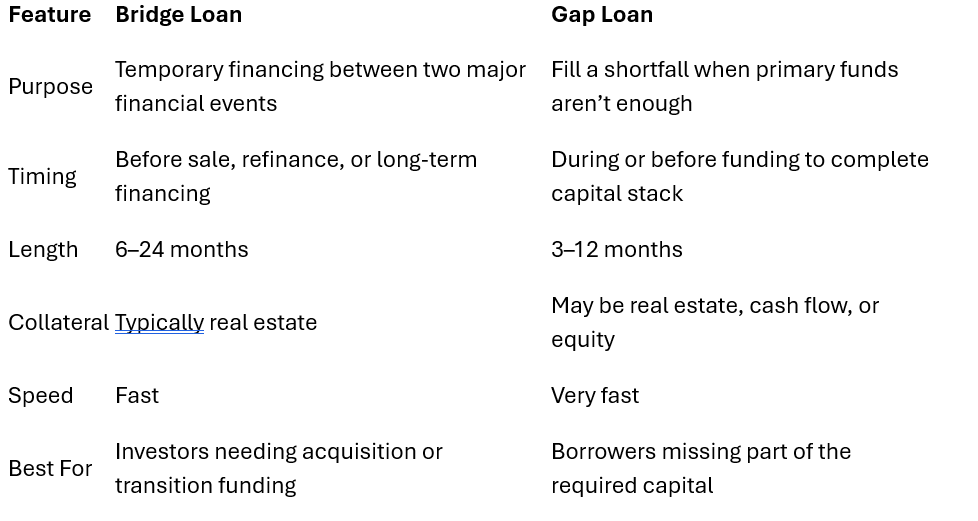
Bridge Loan vs. Gap Loan: Side-by-Side Comparison

Comparison table: Bridge Loan vs. Gap Loan. Features include purpose, timing, length, collateral, speed, and best use.

Which One Do YOU Need?

Choose a Bridge Loan If…

  • You found a strong investment but need to close quickly
  • You’re waiting on a property sale or long-term loan approval
  • You want short-term liquidity without disrupting long-term plans
  • You need acquisition-ready funds today

Choose a Gap Loan If…

  • You’re short on down payment or working capital
  • Your SBA or bank loan doesn’t cover the full project cost
  • Construction expenses increased unexpectedly
  • You have financing — but need a little extra to get across the finish line


How Plethora Financial Solutions Helps

With traditional lenders tightening rules and slowing down approvals, Plethora Financial Solutions offers fast, flexible Bridge and Gap Financing with:

  • Quick decisions
  • Tailored underwriting
  • No government delays
  • Funding for real estate, business acquisition, working capital, and expansion


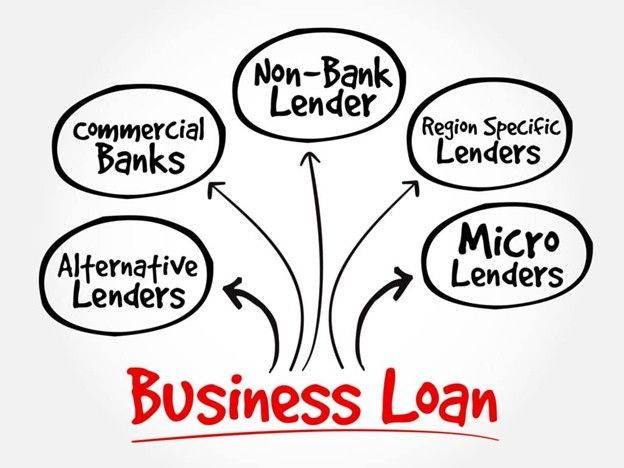
Diagram showing different types of business loan lenders: banks, non-bank lenders, and micro-lenders.

Ready to Secure Fast Capital?

📧 GChang@PlethoraFinancialSolutions.com
📞
832-521-8887
🌐
www.PlethoraFinancialSolutions.com

Send us a message

For immediate assistance and personalized conversation, our experienced advisors are just a phone call away.

A black and white silhouette of a telephone on a white background.

832-521-8887

A black arrow pointing to the right on a white background.
A black map pin with a hole in the middle on a white background.

Cypress, TX

A black and white clock icon on a white background.
Mon - Fri
-
Sat - Sun
Closed

Have a specific question or want to request a free,

no-obligation consultation? Fill out the form below, and one of our dedicated financial professionals will be in touch shortly.

Contact Us

December 5, 2025
LTV vs. LTC: What’s the Difference and When Should You Use Each?
Man in a suit showing documents and a laptop to an elderly couple, smiling.
November 18, 2025
Unlock flexible financial solutions to keep your business moving forward with Plethora’s tailored funding options and expert support.
November 18, 2025
Understanding SBA Loan Programs The U.S. Small Business Administration (SBA) plays a vital role in supporting entrepreneurs by guaranteeing loans made through partner lenders. Two of the most popular programs are the SBA 7(a) and SBA 504 loans — each designed to help businesses grow in different ways.
Show More